
Portfolio. Background Artist
Minoru Nishida 西田 稔 · にしだ みのる
Mushi Pro alumnus who painted Third Earth, then went on to Kill Bill
Joined Tezuka's Mushi Productions in 1964. Listed as 美術 (art department) on Topcraft's entire Rankin/Bass run from 1972. Background painter on ThunderCats. Forty years later, art director on Kill Bill Vol. 1.
- Born
- 1941
- Role on ThunderCats
- Background Artist / Animation Staff
- Season involvement
- All seasons. Specialty: designing and painting backgrounds for the show.
Biography
Minoru Nishida was born in 1941 and joined Mushi Production. Osamu Tezuka's pioneering animation studio, in 1964, at the age of 23. Mushi was producing Astro Boy and Kimba the White Lion at the time, and was the studio inventing what would become the modern TV-anime production model. Nishida came up inside that environment as a background painter.
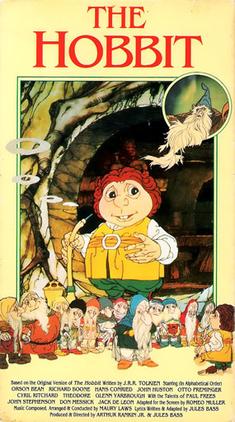
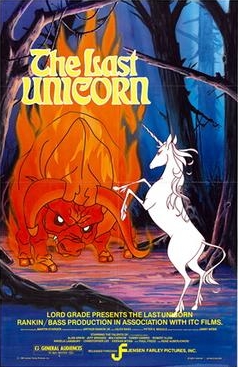
By 1972 he had moved to the new studio Toru Hara was founding in Asagaya. The Japanese Wikipedia entry for Topcraft lists him among the original membership under 美術 (bijutsu, art department) alongside Yoshihara Kazusuke and Kawano Mitsuru. He is credited as 美術設定 (background design) on essentially every major Topcraft Rankin/Bass production: Kid Power (1972), 'Twas the Night Before Christmas (1974), The First Easter Rabbit (1975), Frosty's Winter Wonderland (1976), The Hobbit (1977), The Return of the King (1980), The Last Unicorn (1982). His backgrounds gave Topcraft's entire output its sense of place.
When Topcraft fractured in 1985, Nishida went with Iizuka to Pacific Animation. He became the studio's lead background specialist on ThunderCats, the painted vistas of Third Earth, the Cats Lair interiors, the Mumm-Ra's pyramid scenes, the recurring Black Pyramid set, the alien-jungle and ice-and-snow biomes that defined the show's sense of place are largely from his desk.
After ThunderCats wrapped, Nishida stayed at PAC through the Disney acquisition. He painted backgrounds on Disney Afternoon shows including Darkwing Duck and Adventures of the Gummi Bears, and on other PAC-WDAJ work into the 1990s.
His career took an unexpected turn in the 2000s when he was credited as art director on Warner Bros.' Superman: The Animated Series, and again as an art-direction contributor on Quentin Tarantino's Kill Bill Vol. 1 (2003), specifically the O-Ren Ishii anime backstory sequence animated by Production I.G. Nishida's Mushi-trained background instincts are visible there forty years after Astro Boy.
On ThunderCats
Background design and painting across the four-season run. The painted-set sensibility that makes the show feel like a real place rather than a TV-animation flat, soft horizon hazes, layered foliage, weathered stone surfaces, came largely from his desk.

Selected works around and after ThunderCats
- Topcraft Rankin/Bass run 1972–1985
Background designer on the studio's entire R/B output, from Kid Power through The Last Unicorn.
- SilverHawks 1986
Background work on the Rankin/Bass sister show.
- The Comic Strip 1987
Continued at PAC across the Rankin/Bass anthology.
- Darkwing Duck 1991-92
Background artist at Walt Disney Animation Japan.
- Adventures of the Gummi Bears early 1990s
Background artist at WDAJ.
- Superman: The Animated Series 1996-2000
Art director on the WB Animation series.
- Kill Bill Vol. 1 2003
Art-direction contribution on the anime O-Ren Ishii backstory.
Why this credit matters
Nishida is the reason ThunderCats has a sense of place. He is also the only person on the credits roster of both Astro Boy (1963) and Kill Bill (2003), separated by forty years and an industry that twice reinvented itself.
Sources
- Wikipedia (日本語), トップクラフト (Nishida on the original Topcraft art roster)
- ThunderCats-Ho Wiki. Minoru Nishida
- Anime News Network. Minoru Nishida
- IMDb. Minoru Nishida (full credits)
Cover artwork and portrait images here are reproduced under fair use for editorial commentary. Image sources: Wikipedia / Wikimedia Commons (work cover art); Rick Goldschmidt, "Masaki Iizuka remembered" (2020) for the Iizuka portrait; Z&G Animelab (zganimelabo.co.jp) for the Akiyama 2024 photographs. Japanese-language biographical sources cited per page above.