
Portfolio. Character Designer
Tsuguyuki Kubo 窪 詔之 · くぼ つぐゆき
The Topcraft veteran who named the studio
Animated the opening of Speed Racer at Tatsunoko in 1967. Coined the name 'Topcraft'. Co-founded Pacific Animation in 1983. Still working in his 80s at Studio Pierrot.
- Born
- 8 April 1942, Taipei, Taiwan (then under Japanese administration)
- Role on ThunderCats
- Character Designer / Supervising Animator on Opening
- Season involvement
- Animation staff credit; supervising animator on the opening sequence.
Biography
Tsuguyuki Kubo (窪詔之) was born in Taipei on 8 April 1942, a colonial-era birth that made him part of the wave of post-war Japanese animators whose lives started outside the home islands. His younger brother Hidemi Kubo (窪秀巳) became an animator too; they would work alongside each other at both Topcraft and Pacific Animation for decades.
Kubo entered animation by accident. The Animage interview from February 1976, the closest thing to a primary-source biography of him, tells the story: he was on a more conventional career track, applied to Tatsunoko Production's 1964 animator recruitment on a whim because he wanted to draw, and was accepted despite knowing almost nothing about anime (his manga reading was limited to Tezuka). Within six months of joining he was doing genga (原画, key animation). By 1965 he was animation director on Space Ace, Tatsunoko's debut series. In 1967–68 he animated the opening of Mach Go Go Go, the Speed Racer opening that became, for a generation of American kids watching the dub, the first shot of Japanese animation they ever saw.
He left Tatsunoko to found his own outfit, Studio Bees, which subcontracted to Toei and Tatsunoko on Rainbow Squad Robin (his most beloved character-design work, per the dedicated fan-tribute page) among others. Bees was a stepping-stone; in 1972 Kubo moved to a new studio Toru Hara was building in Asagaya. The studio needed a name, and Kubo proposed Topcraft, "the top specialists." The name stuck. The Japanese Wikipedia entry for Topcraft confirms it: "the naming of Topcraft was Kubo Tsuguyuki's proposal, with a nuance of 'top specialists.'"
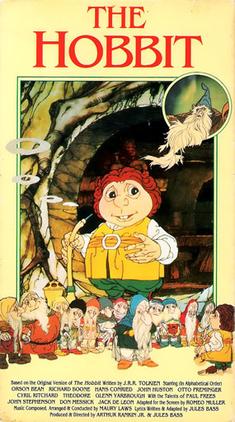
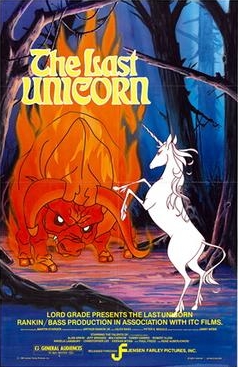
Through the 70s Kubo became the character-design backbone of Topcraft's entire Rankin/Bass output. He has director-level credits on Kid Power (1972, animation supervision + character design + total animation direction). Storyboards on 'Twas the Night Before Christmas (1974), The First Easter Rabbit (1975), Frosty's Winter Wonderland (1976). Animation Supervisor on The Hobbit (1977), where his character designs. Bilbo, Gandalf, Smaug, defined the visual identity of the most-loved Tolkien adaptation of the era. The same role on The Stingiest Man in Town (1978). Continuity Design and Character Design on The Return of the King (1980) and The Last Unicorn (1982).
When Topcraft fractured in 1985, most of the staff following Miyazaki to Studio Ghibli. Kubo went with Iizuka to Pacific Animation. He supervised the animation of the ThunderCats opening sequence, the 75-second piece that the 23-year-old Masayuki key-animated solo. He stayed at PAC through SilverHawks, The Wind in the Willows (Animation Design, 1987), and TigerSharks.
After PAC he moved to Studio Pierrot, where he eventually contributed to long-running productions including Naruto and Bleach. He passed 80 in 2022. The Sakuga Wiki, the encyclopedic Japanese animator fan-database, notes him as one of the few veterans of the TV-anime founding era still actively working.
On ThunderCats
Character design contributions to the supporting cast. Supervising-animator credit on the opening sequence, overseeing the work of his then-23-year-old protégé Masayuki.

Selected works around and after ThunderCats
- Tiger Mask 1969–71
Sakuga supervisor on key episodes 15, 30, 35. Per the Sakuga Wiki, his ovewhelming brushwork on Tiger Mask is still talked about today.
- Kid Power 1972
Animation supervision + character design + total animation direction. Topcraft's first Rankin/Bass commission.
- 'Twas the Night Before Christmas 1974
Character design (joint) for the Rankin/Bass Christmas special.
- The Hobbit 1977
Animation Supervisor + Character Design (joint, with Lester Abrams) + storyboard contributions. 40,000 cels, 817 cuts, 380 colors. Kubo led the production for five years.
- The Stingiest Man in Town 1978
Animation Supervisor.
- The Return of the King 1980
Continuity Design, storyboard, Character Design (joint).
- The Last Unicorn 1982
Continuity Animation, Character Design (joint), storyboard. 75,000 cels, 1,187 cuts, 260 colors. Topcraft's first theatrical feature.
- PAC Rankin/Bass slate 1985–1990s
Continued at Pacific Animation through SilverHawks, Comic Strip, Wind in the Willows, TigerSharks.
- Gundam 0080: War in the Pocket 1989
Eye-catch animation (uncredited; later confirmed by the Blu-ray memorial-box cover-art credit).
- Gummi Bears Season 6 1990–91
Animation Supervisor on 7 episodes at Walt Disney Animation Japan.
- Darkwing Duck 1991–92
Layout Director on 13 episodes at WDAJ.
- Studio Pierrot. Naruto / Bleach 2002 onwards
Production contributor on the long-running franchises.
Why this credit matters
Kubo is the through-line. He named the studio. He animated the Speed Racer opening at Tatsunoko in the 60s, was at Topcraft for The Hobbit and The Last Unicorn in the 70s and 80s, at PAC for ThunderCats, at WDAJ for Darkwing Duck, and at Pierrot for Naruto. His career spans the entire history of Japanese TV animation as a medium. He is alive and working as this is published.
Sources
- Sakuga Wiki, 窪詔之 (definitive Japanese-language credit list, including Topcraft name etymology)
- Wikipedia (日本語), トップクラフト (confirms Kubo proposed the Topcraft name and joined before Hara)
- Rainbow Squad Robin fan tribute, '窪詔之さんのこと' (sourced from Animage Feb 1976 interview)
- AniDB. Kubo Tsuguyuki
- ThunderCats-Ho Wiki. Tsugu Kubo
Cover artwork and portrait images here are reproduced under fair use for editorial commentary. Image sources: Wikipedia / Wikimedia Commons (work cover art); Rick Goldschmidt, "Masaki Iizuka remembered" (2020) for the Iizuka portrait; Z&G Animelab (zganimelabo.co.jp) for the Akiyama 2024 photographs. Japanese-language biographical sources cited per page above.