
Staff Artist and Writer
Dennis J. Woodyard
The artist behind ThunderCats' final episodes, credited as Production Staff.
For the final 35 episodes, every new villain and ally, each random prop and fabled treasure, even the bizarre locations and creatures of New Thundera and Third Earth all started as pencil sketches on Dennis J. Woodyard’s desk. Then he started writing, and we got two of the best episodes near the series’ end. So many meaningful contributions, though you wouldn’t guess it from his crediting.
- Role on ThunderCats
- Designed secondary characters, props and some backgrounds. Reviewed storyboards, animation dailies and final prints. Wrote two episode scripts.
- Episodes
- Design and art direction for show 96, “The Totem of Dera,” through show 130, “The Book of Omens.” Writer of “Shadowmaster” and “Well of Doubt”.
- Also at Rankin/Bass
- Art direction for The Comic Strip (1987), reviewing animation dailies and final prints. He designed none of those characters and says so plainly.
- Later
- Merlin and the Dragons, Exosquad, Gargoyles, Men in Black, NASCAR Racers, Ozzy & Drix.
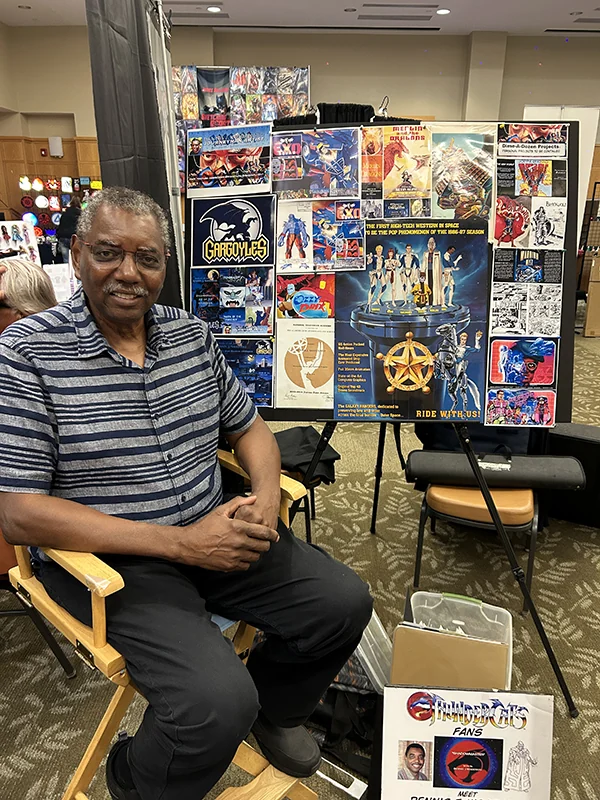
The credit that's not in the credits
In the ThunderCats end-credit crawl for the show’s later seasons, Dennis J. Woodyard is listed under Production Staff, a catch-all group of folks working full-time for Rankin/Bass, all wearing many hats. Above that, the listing of Secondary Character Designs carries other names: the artists who held the job before Dennis, or who were more focused on The Comic Strip at the time. Industry credit aggregators like IMDb also omit his artistic contributions, only catching his two writing credits.
So, sadly, the artist who designed the secondary characters for the last 35 episodes of ThunderCats is not credited as such. Were it not for his meticulous record-keeping and willingness to share old sketches and other materials on his blog and YouTube channel, we might never have known the extent of his contributions. And yet he has never made a fuss about the lack of credit. Asked in 2005 what his experience on ThunderCats meant to him, he took a wider view.
I was humbled by the fact that I was able to work with a great group of talented people on a show that’s become a classic that’s still enjoyed and loved by so many fans. I think of it as the closest thing I’ll get to immortality.
Dennis J. Woodyard, thundercatsfans.org email Q&A, December 2005
Twenty-one years later, on the Beyond Thundera podcast, Dennis reflected on the ups and downs of his career, recalling that a friend once told him “You’re not on anybody’s list.” If proper crediting is one half of your CV, the other is your professional network. “People forget me,” said Dennis. “I was easily forgettable.”
Which season was it, exactly?
ThunderCats has never had one generally agreed-upon season structure. While the first 65 episodes are clearly Season 1, the second order of 65 episodes were produced over several years, with three batches of 20 episodes each released for syndication from 1987 through 1989. So while many sources, including Peter Lawrence, refer to them all as the second season, you'll also see references to Seasons 3 and 4.
Dennis designed for the last 35 ThunderCats episodes, show 96 through 130. Where do they fall?
| Numbering scheme | Structure | Where episodes 96 to 130 land |
|---|---|---|
| Warner Bros. DVD | Two seasons: Episodes 1 to 65, then 66 to 130 | Season 2 |
| Wikipedia and TheTVDB | Four seasons of 65 / 25 / 20 / 20, with ThunderCats Ho! kicking off Season 2 | Seasons 3 and 4 |
Dennis is precise about his own starting point, because he’s kept everything! Reading from his book of production materials on camera in 2026, he said, "I joined at episode 96, “The Totem of Dera,” written by J. Larry Carroll, and the date on the script was September 30th, '87."
Dennis's collection of sketches and production material from his time on ThunderCats suggests that he designed for every episode thereafter, except for show 110, "The Last Day," which featured no new props, characters or locations. Everything else, from "The Totem of Dera" through to "The Book of Omens," passed across his desk.
How he got the job
Dennis studied illustration at the School of Visual Arts in New York from 1969 to 1972, wanting to draw comic books, and came to animation sideways. He got his professional start in children's educational filmstrips, record commercials, and graphic animations for HBO Sports, ABC and other clients, which garnered him two design awards from the Broadcast Designers Association in 1979 and 1981.
His first adventure series was The Adventures of the Galaxy Rangers, where he was one of the artists on the original development team and, once the series entered production, a staff storyboard artist. His professional contacts there led him to ThunderCats! Galaxy Rangers character designer Ed Lee recommended Dennis to Rankin/Bass producer Peter Bakalian, who set up a meeting between Dennis and supervising producer Lee Dannacher.
We met and hit it off immediately. I think a day or two later I was hired, and, as they say, the rest is history.
Dennis J. Woodyard, thundercatsfans.org Q&A, December 2005
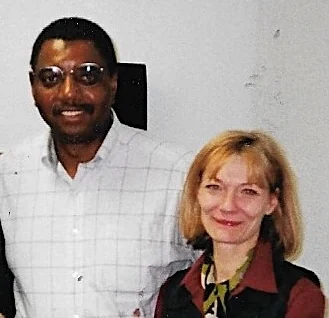
Dennis arrived at Rankin/Bass and dove right in, but his earliest sketches weren’t quite... Thunderian enough. “I remember some of the first things I submitted to Peter. He said, ‘No, that looks like Galaxy Rangers. You can't draw like that for us.’ I said, ‘Yeah, you’re right.’ So I had to learn the style for ThunderCats that was already established.”
How the work actually got made
Given the scale of their output, Rankin/Bass's staff was startlingly small by modern standards. Just ten people! Woodyard was often the only artist in the building.
There were ten people in the Rankin/Bass office. I was the only artist there sometimes. There was Pepe [Moreno] and Bob Camp, who went on to do Ren & Stimpy, and myself. We were the art department, and all I had to do was do drawings for backgrounds and characters and send them to PAC, and they did the magic. We didn't do the storyboards in New York.
Beyond Thundera podcast, 11 June 2026
PAC is Pacific Animation Corporation, the Tokyo studio built out of the remains of Topcraft when most of that studio left to found Studio Ghibli. Dennis is consistently generous about how they transformed his designs into final animations.
"All I had to do was one or two pencil sketches, not even finished sketches, and one maybe a turnaround here or there. And Pacific Animation Company made it look good."
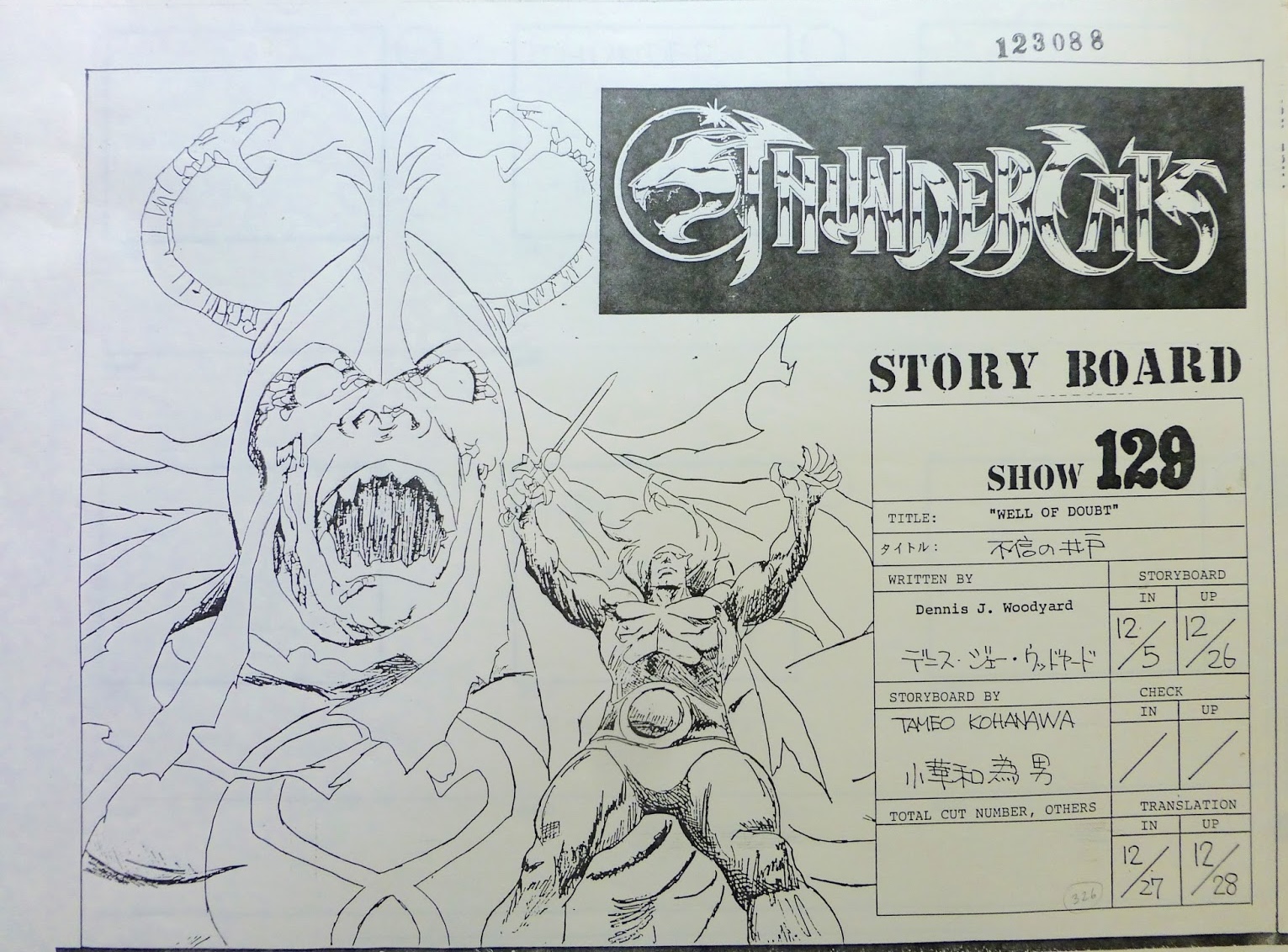
His other standing duty was quality control on the way back. Storyboards returned from Tokyo, and he read them for continuity errors. That’s what led to him eventually writing. "I think that’s one of the things that endeared me to Peter. I picked up a couple of his mistakes in the storyboard! So that’s when they said, ‘Hey, you want to do a script or two?’"
Seeing his characters again
In 2002, Dennis happened into a comic book shop and encountered Wildstorm's new ThunderCats comics. Imagine his surprise of opening that first comic, only to immediately encounter his own designs: Pyron, the dragons inside the Book of Omens, the Key of Thundera. And then Shadowmaster featured heavily in the entire comic! “My jaw dropped.”
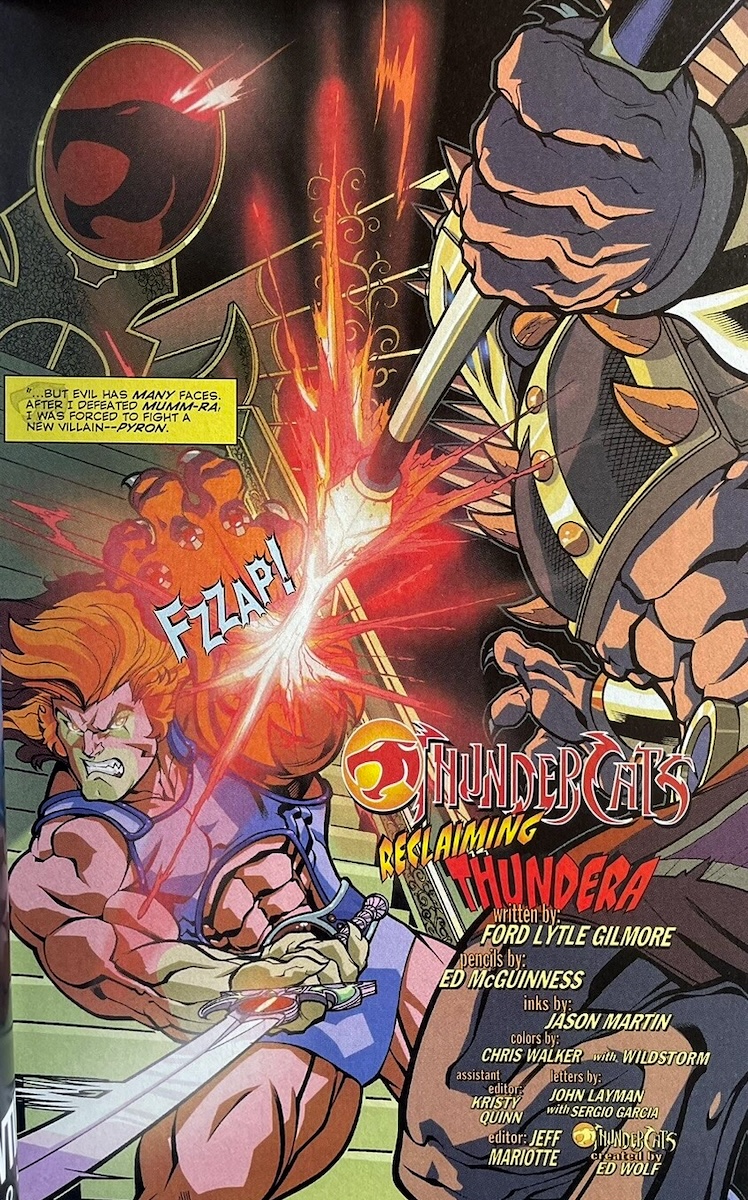
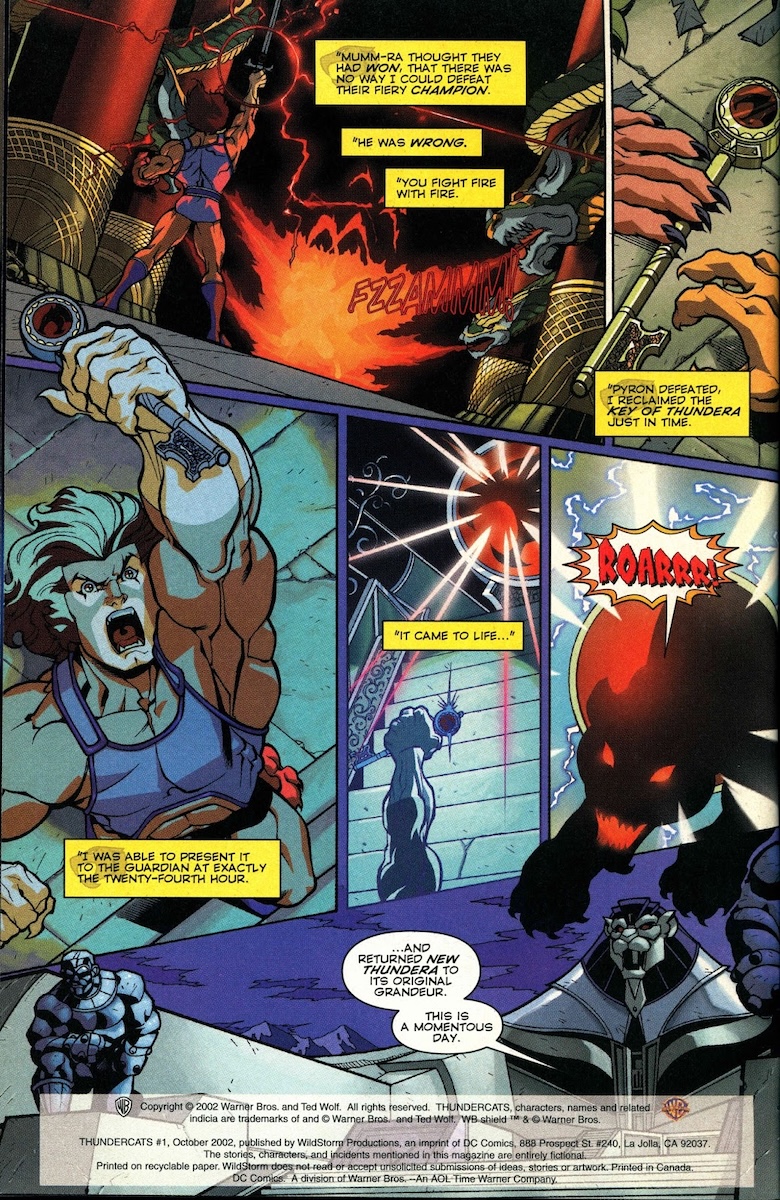
Seeing his characters given new life was invigorating, but two decades passed as Dennis awaited a more tangible reincarnation. In October 2024, Dennis wrote a short line on his blog: "I'm still hoping for the toy companies to make figures of the T'Cats characters I designed for the last season." Finally, in July 2026, Super7 released ULTIMATES figures of two of those characters: Jagara and Zaxx. Dennis was delighted, if a bit surprised.
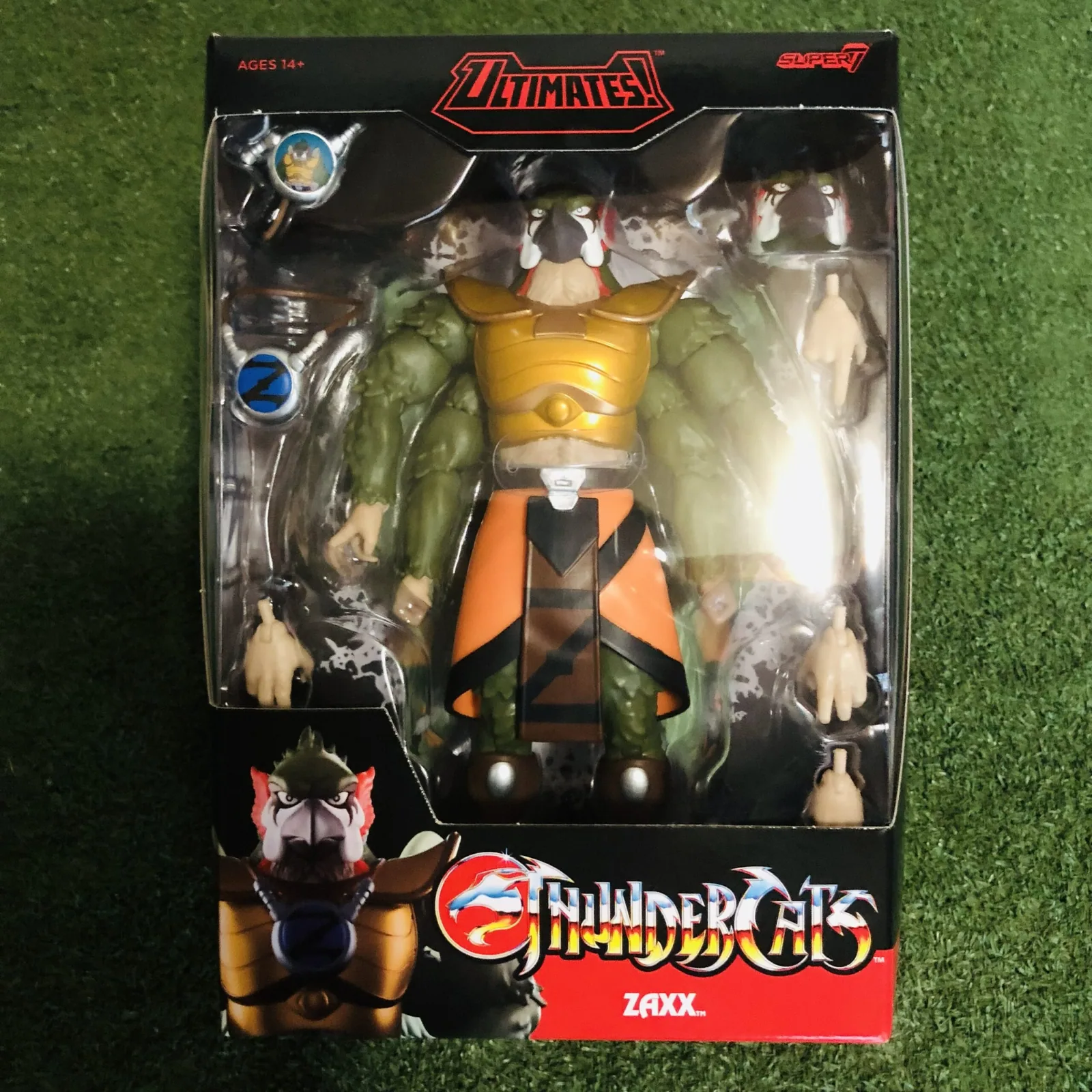
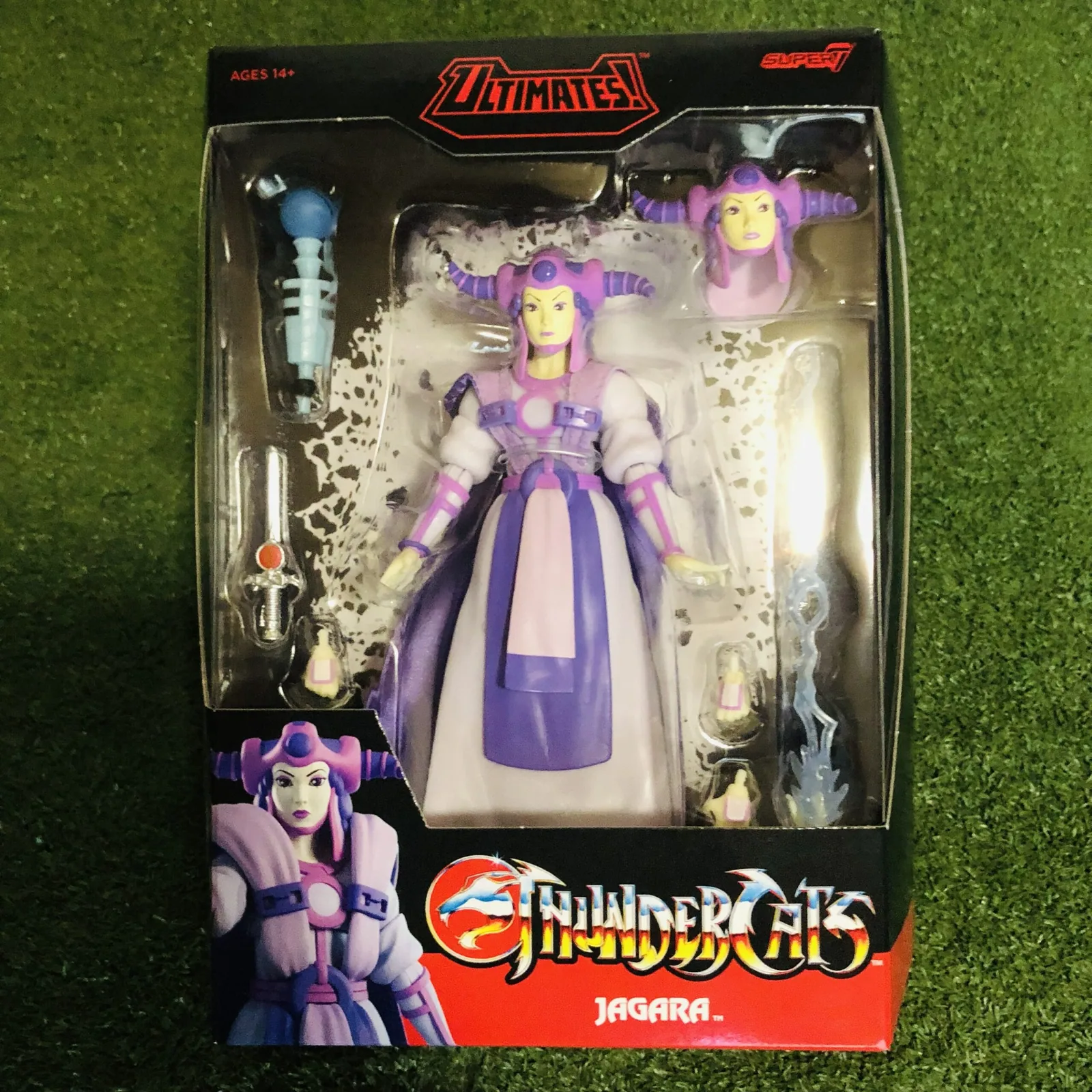
I’m surprised that people really want Zaxx and Jagara! Some people didn’t see them [on the show]. But they’re my children. I want them out there! I’m really proud when I see Jagara looking exactly like I drew her. And I’m glad that the fans appreciate it. That’s all you can ask for.
Dennis J. Woodyard, Radical Retro Rewind?! Podcast, 1 May 2026
When they were announced, Dennis started looking back at other Super7 releases and noticed some familiar items! “There’s the props that I did. There’s a [sphere]. There’s a mirror. Hey, that’s the stuff I did! So, again, I'm happy to see it.”
What he designed
The brief was relentless. “With these shows I was required to design a new character or two every show.” What follows is the list of characters designed by Dennis, drawn from his own annotated blog posts that showcase his sketches side by side with episode screengrabs.
- Shadowmaster
The banished Thunderian wizard he both designed and wrote. His favorite contribution to the show.
Ep 125 Shadowmaster - Jagara
Guardian of the Mighty Gyroscope. Super7 turned her into an ULTIMATES figure in 2026, 37 years after Dennis drew her.
Ep 111 Return to Thundera Part I and Ep 119 Screwloose and Ep 129 Well of Doubt - Zaxx
Mumm-Ra's ancient rival. Dennis's early sketches "looked a lot like Foghorn Leghorn," a deliberate tribute.
Ep 128 The Zaxx Factor - Pyron
Champion of the Ancient Spirits of Evil, and the last villain Lion-O ever fights. "Inspired by Ray Harryhausen movies with a touch of comic book legend Jack Kirby."
Ep 130 The Book of Omens - Two-Time
The two-headed robot master of the ship Dome-Down. "One of my favorites besides Shadowmaster is Two Time."
Ep 113 Return to Thundera Part III and Ep 126 Swan Song - Charr
The four-armed scrap-metal collector who roams the galaxy in his Flying Furnace and twice reforged the Sword of Omens.
Ep 118 The Heritage and Ep 112 Return to Thundera Part II - Screw-Loose
Not a robot, but a SAP, or Self-Acting Phenomenon, Screw-Loose comes out of retirement to service the Gyroscope. Dennis's “nod to C-3PO of Star Wars fame.”
Ep 119 Screwloose - Doji-Kage
The mechanical war horse Hachiman rides to New Thundera, and one of Dennis's favorite designs from the series.
Ep 108 The Jade Dragon - Ma-Bat
The rare Ma-Mutt disguise to appear in more than one episode. Dennis submitted a simple design and says Pacific Animation "really buffed it up."
Ep 108 The Jade Dragon and Ep 125 Shadowmaster - Baron Tass and Mr. Grubber
The predatory landowner and his accountant, from his own script. Grubber was Peter Lawrence's idea.
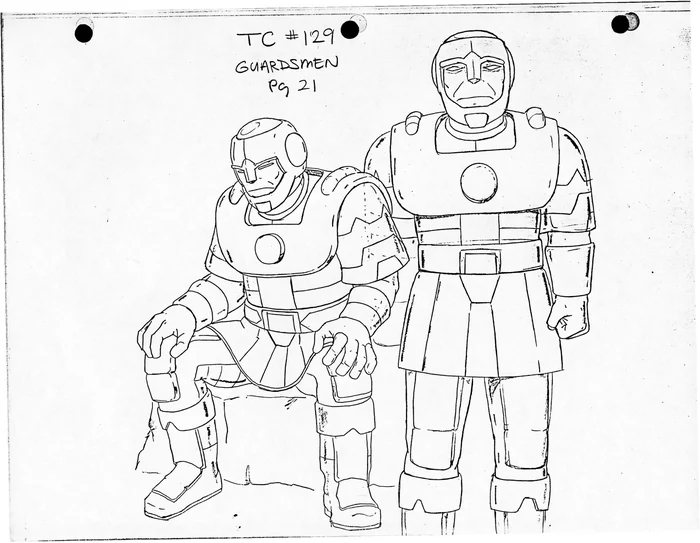
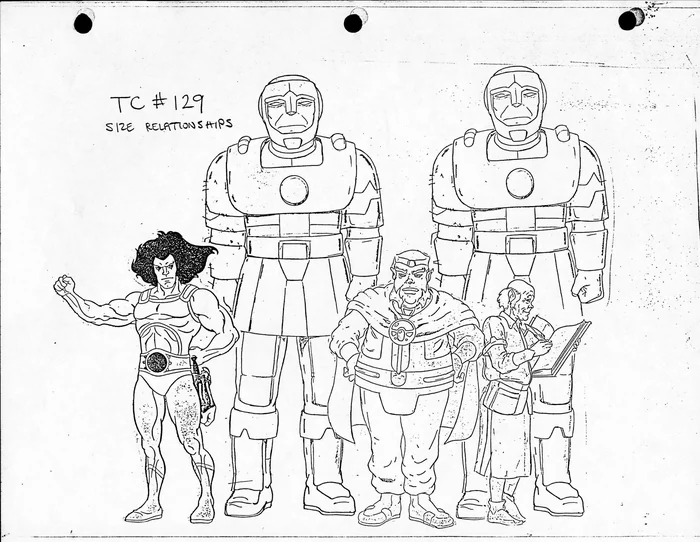
Ep 129 Well of Doubt - The Guardsmen
Stone warriors inspired by the terracotta army of Xi'an, guarding the Well of Doubt.
Ep 129 Well of Doubt - Leah, the Mirror Wraith, the Evil Doll
A young refugee and the demon-turned-creepy-doll that Mumm-Ra gives her in secret. "That little doll is like a Chucky doll," jokes Dennis.
Ep 116 Leah - Frogman and Evil Lily Pads
An ancient hydrokinetic enemy of Jaga who escapes from an underground lake and deceives the ThunderKittens.
Ep 117 Frogman - The Great Beneath and the Stone Giants
Environment and creature design for the return to New Thundera.
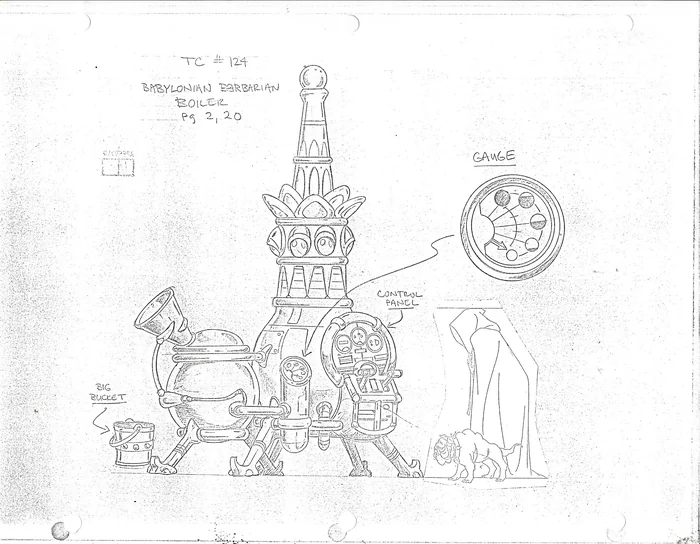
Ep 111 Return to Thundera Part I - The Babylonian Barbarian Boiler
"My all time favorite Thundercat prop design."
Ep 124 Ma-Mutt's Confusion - The Treasure of Thundera
As Snarf would say, “the Key, the Bracelet of Power, the Jade Dragon (and sorry it's broken), the Chain of Loyalty, the Mirror of Truth, and all the rest of the stuff!”
Ep 110 The Last Day - Captain Bragg and Crownan
Love them or hate them, these two rolled in on their Circus Train (also a Dennis design) and cleared the way for a villain-free Third Earth.
Ep 109 The Circus Train and Ep 114 Return to Thundera Part IV and Ep 122 Cracker's Revenge - Thunderian Refugees
In addition to Tor, whom he featured in “Well of Doubt,” Dennis designed Thunderian refugees in several other episodes.
Ep 107 The Thunderscope and Ep 113 Return to Thundera Part III and Ep 116 Leah and Ep 120 Malcar
Dennis is the first to call out the designs from his time at Rankin/Bass that are not his. The New Thundera map and some secondary designs were Jim Meskimen’s; the New Cat's Lair, Whisker, Dome Down, and Charr's Flying Furnace came from friend and fellow Galaxy Rangers artist Ray Shenusay; and every character on The Comic Strip was designed by Bob Camp and Pepe Moreno.
The two Super7 made
Super7 worked from the same model sheets Dennis kept, and the accessory lists are a fair guide to how much of the drawing survived the trip. Jagara arrives with the gyroscope control stick and a soft goods cape, and Zaxx with the Rosencrantz Medallion in two states, one wearable and one holding his captured spirit.
Prices and stock read from Big Bad Toy Store on 3 September 2026.
Some links on this page are affiliate links that support thundercats.org.
-
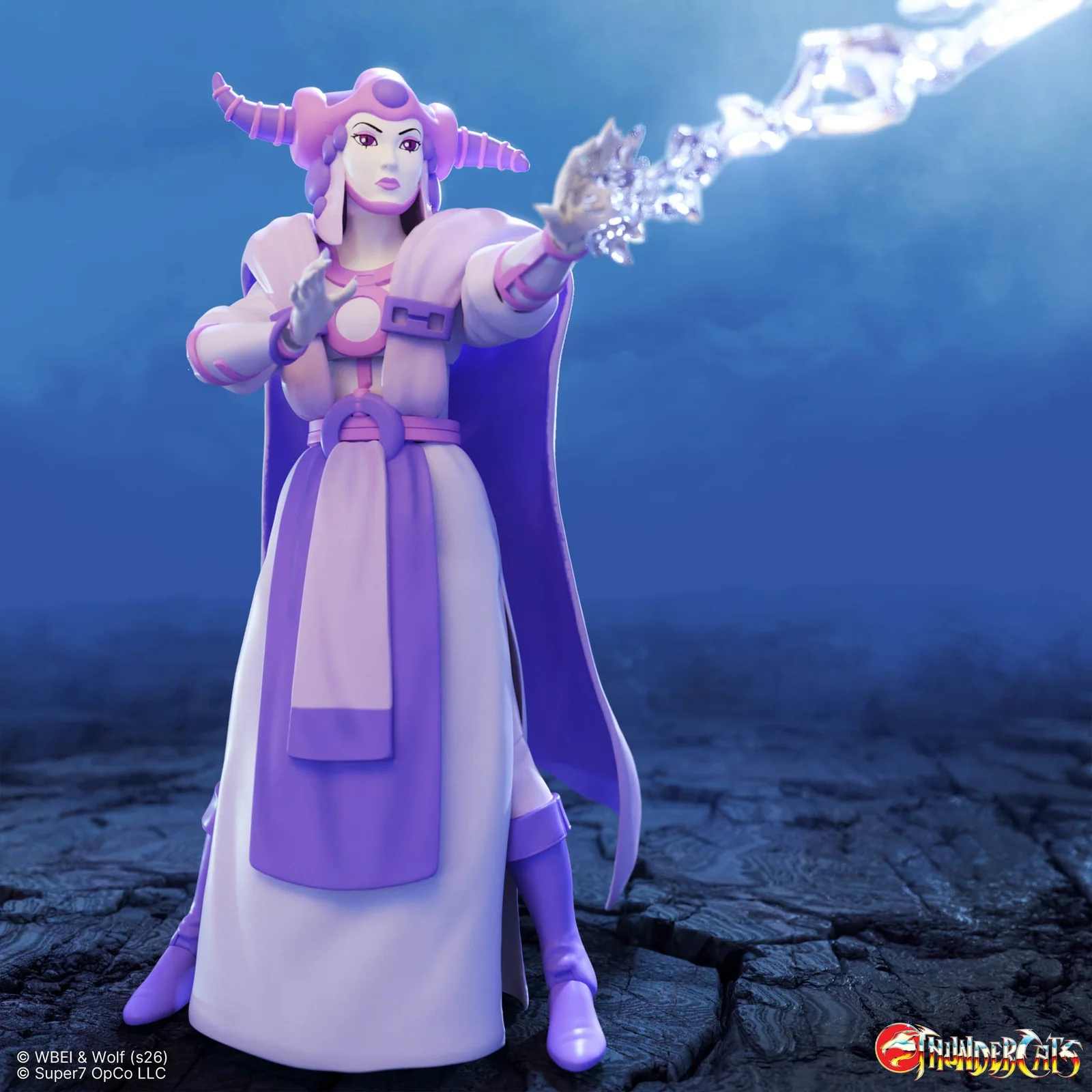 In stock Jagara ULTIMATES! Wave 15 Guardian of the Mighty Gyroscope, with alternate heads and hands, the gyroscope control stick, a soft goods cape and the Sword of Omens. $64.99 Buy at BBTS → Our page on this figure
 -
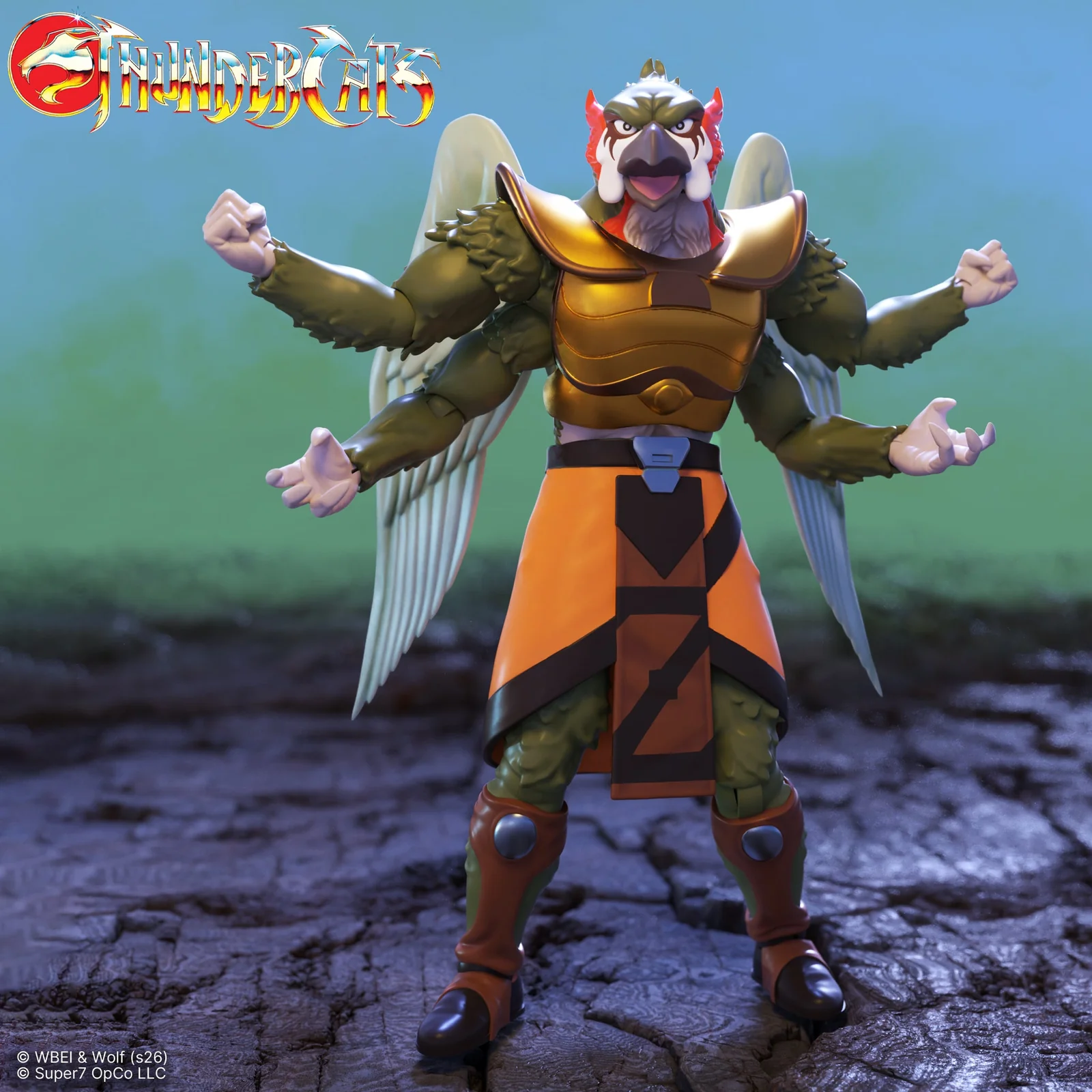 In stock Zaxx ULTIMATES! Wave 15 Mumm-Ra's ancient rival, with alternate heads and hands and the Rosencrantz Medallion in both its wearable and spirit forms. $84.99 Buy at BBTS → Our page on this figure
Sheets from Dennis's desk
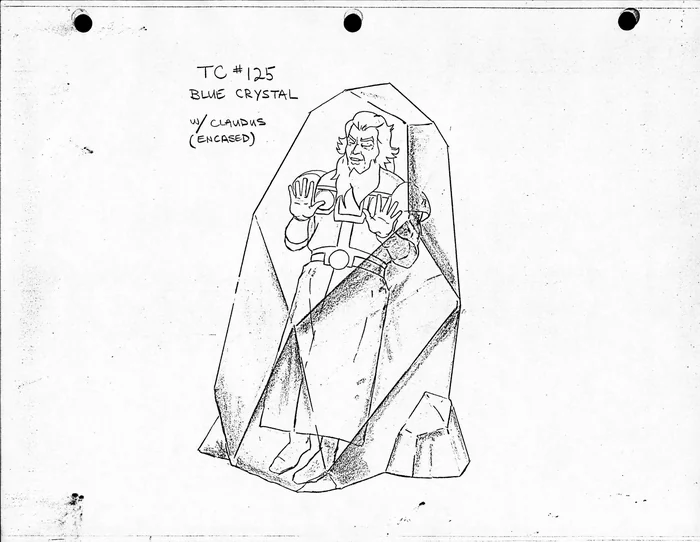
Model sheets are the working document of television animation: a character drawn from the angles the overseas studio would need, with size comparisons and other notes. Dennis's blog is full of scans of sheets like these.
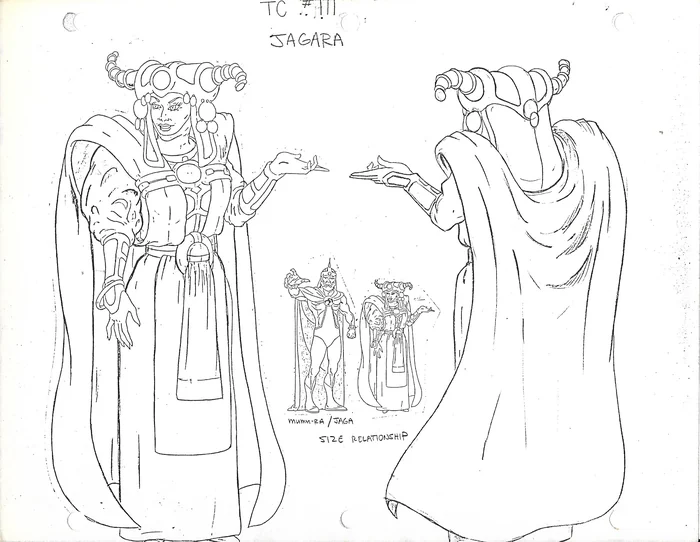
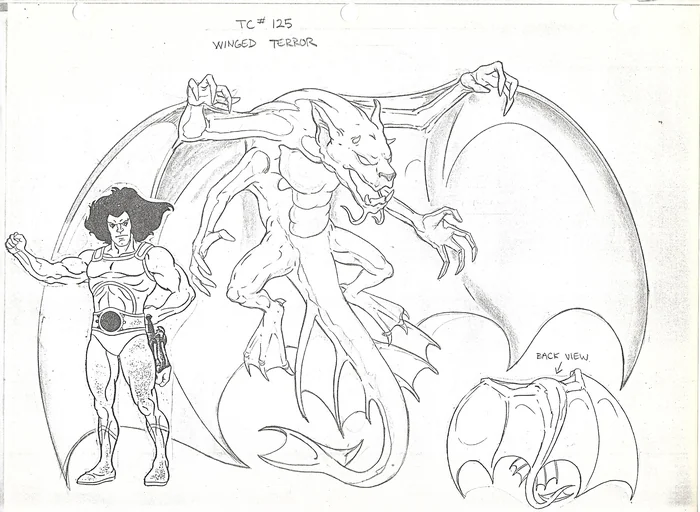
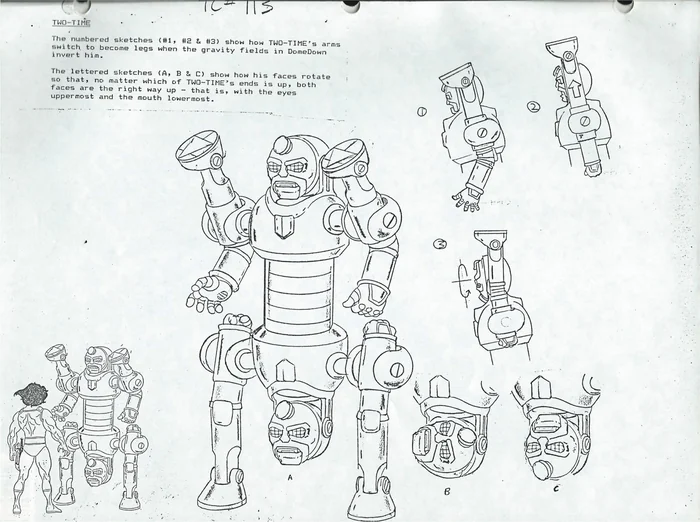
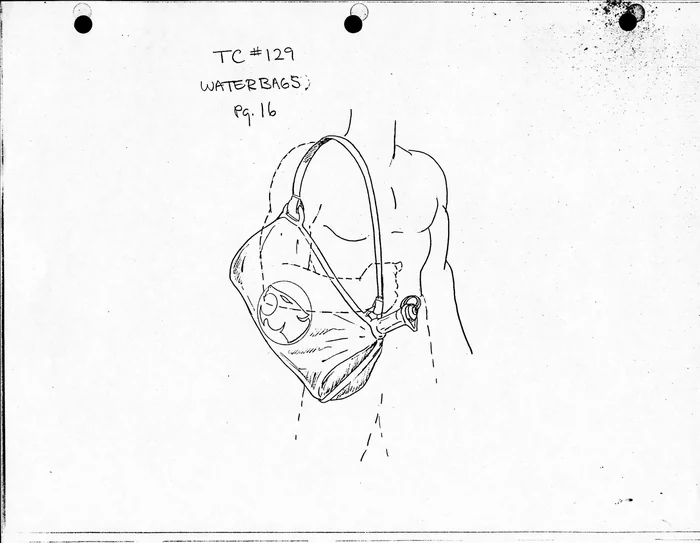
Artwork by Dennis J. Woodyard, reproduced from scans published at gpeterlawrence.com and dragonflyent.blogspot.com. ThunderCats and its characters are the property of Warner Bros. Discovery. Rehosted on this site's own storage, not hotlinked. Not AI-generated.
The two scripts
An ancient Thunderian wizard, banished to the Shadow Realm by Jaga and Claudus, petitions the Ancient Spirits of Evil to let him destroy the ThunderCats in exchange for his freedom (much to Mumm-Ra’s fury). He uses an imprisoned Claudus as bait and lures Lion-O into a trap. Mumm-Ra, meanwhile, enlists Ma-Mutt as Ma-Bat to sabotage the Shadowmaster’s plan.
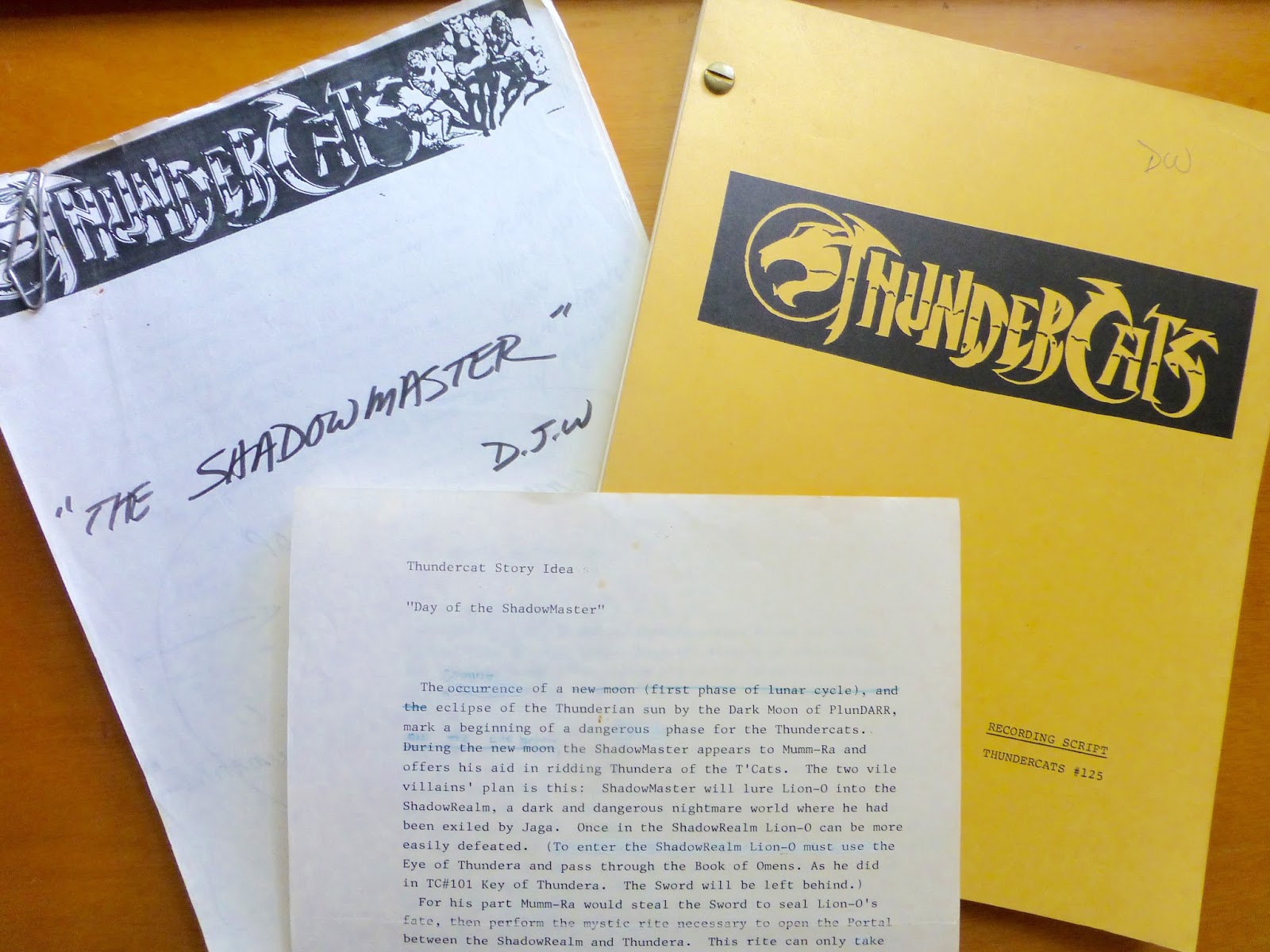
It began life as a rejected pitch about a magic cloak found by the ThunderKittens. "The idea was rejected, but I liked the cloak so much I had to use it." At 80 pages, the first draft was wildly long: Dennis had invented a parallel band of Shadow Realm heroes called the LightLancers, whom Lion-O would befriend.
Peter said, “You’re out of your mind. You’ve only got 20 minutes, man. You need an 80-page outline for that, so no, cut this down. Let's get down to what's really needed.” Which I did, and I’m very proud of it.
Beyond Thundera podcast, 11 June 2026
I always wondered if many Thundercats fans caught my homage to Star Wars with the final scene of the episode with Claudis and Jaga, just like the Darth Vader and Obi Wan shot at end of The Return of the Jedi.
dragonflyent.blogspot.com, 4 August 2015
The ThunderCats guide a Thunderian spaceliner down to New Thundera. Aboard is Baron Tass, a predatory landowner who keeps Thunderians in perpetual debt, and his accountant Mr. Grubber. Sent to fetch spring water, Tass finds a cave holding the Well of Doubt and an army of stone Guardsmen controlled by an amulet. He gives the water to Lion-O, who loses all self-belief and crashes the Whisker.
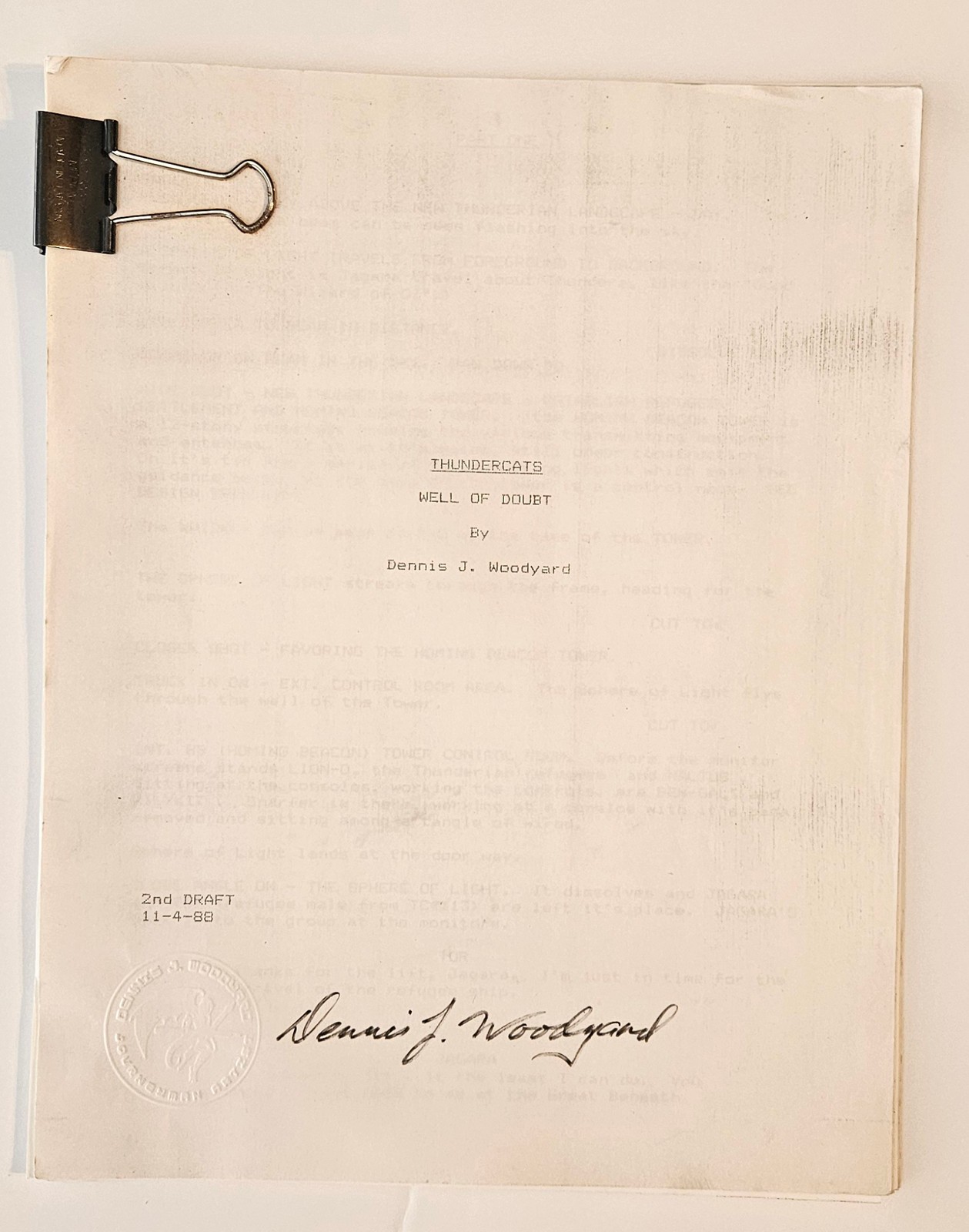
The idea came from somewhere real. "The concept for the story was inspired by the terracotta warrior statues found buried in China." The first version starred WilyKit, who would find a crown, wake thousands of terracotta warriors who took her for their queen, and defeat them with their one weakness, water. “My vision was the whole army of them,” but the constraints of animation winnowed it down to just two. A lesson he learned from Peter: “No swarms, crowds or hordes.”
Peter is the one that suggested the second character. Baron Tass is the villain who’s like a landowner who enslaved people. But Peter said, “No, you need somebody to work off this guy.” And so that’s what Mr. Grubber was. Peter’s idea. I still have the notes from both shows.
Beyond Thundera podcast, 11 June 2026
Peter Lawrence, the story editor and showrunner on the other side of both of those conversations, wrote this in 2025: "Shortly after he joined, he put his hand up to write some episodes. Shortage of time and opportunity confined him to just two: “Shadowmaster” and “Well Of Doubt.” I don’t know if he continued to write for other shows but, if he didn't, he should have."
And on the drawings themselves: “A terrific artistic talent, Dennis' designs were very close to animation-ready. Even on Season Two, we were working under great pressure. Dennis was always calm and equable, by no means a given either in designers or writers. Certainly he made my life – and Lee's – easier than it might have been.”
”We got nothing.” The End of Rankin/Bass
After ThunderCats ended, The Comic Strip had wound down, and Telepictures was acquired by Warner Bros., Rankin/Bass tried to keep things going. Dennis is one of the few staff members who was still there for this final chapter, and he recently recalled what turned out to be the nail in Rankin/Bass's coffin.
In 1988, the studio developed a low-budget pilot called CBTV (Comic Book Television Video), to pitch to its new corporate owner. It was meant to be a live action/animation hybrid, starring Maggie Jakobsen, Frankie Pace and Steve Sashen performing sketch comedy and reading from comic books that would be animated on screen. As art director, Dennis recalls pressing Masaki Iizuka of Pacific Animation for more dynamic animation. Masaki refused; the budget was too tight.
PAC delivered the pilot reel, which Arthur Rankin Jr. screened for the team. Then he turned to the room and issued a stark verdict.
When the reel finished, he turned around to all of us and said, “We got nothing.” His “we got nothing” remains the most memorable quote of my animation career from any executive. “But I have to go out and sell this,” he said. “I have to get on a plane and try to sell this to Warner Brothers. I’ll just tell them that this is an animatic first draft.”
Dennis J. Woodyard, from both his own CBTV YouTube video and Radical Retro Rewind?!
Rankin came back from pitching the show in LA and gathered the staff. "He just said, ‘We’re closing. Those guys hate our guts. They don’t like us because we’re from the East Coast. They’re not going to give us any kind of money."
After Rankin/Bass shuttered, Dennis went back to freelance work for HBO and King Features, then on to a career that outlasted Rankin/Bass by twenty years and took him from New York to California to Seoul and back.
Other Animation Work
- The Adventures of the Galaxy Rangers 1986
Storyboard artist. The job that got him recommended to Rankin/Bass.
- Captain N: The Game Master 1990
Penciller on the Valiant comics run.
- Merlin and the Dragons 1991
Director, art director and character designer on the PBS special narrated by Kevin Kline.
- Exosquad 1993 to 1994
Overseas animation supervisor on season one, then producer across 39 episodes of season two.
- Gargoyles 1995 to 1996
Director on 20 episodes and producer on 19 for Disney Television Animation.
- Men in Black: The Series 1997 to 1998
Director, three episodes.
- NASCAR Racers 1999 to 2001
Producer on 26 episodes and director on seven for Saban, plus the feature-length movie.
- Santa, Baby! 2001
Consulting animation director on the last Rankin/Bass primetime special, for Fox.
- Ozzy & Drix 2003 to 2004
Director. Named on the 2004 Daytime Emmy nomination for the show.
- X-Men: Evolution, TMNT, Stripperella, Tutenstein 2002 to 2008
Storyboards across a decade of Los Angeles series work.
- Ultimate Avengers 2, Dragonlance, The Condor 2006 to 2008
Storyboards on direct-to-video features.
Post-Animation Pursuits
Dennis left the animation business in 2008 and moved with his family to Rochester, New York, his wife's home town. He worked as a library technician at Brighton Memorial Library and then spent thirteen years as senior library clerk at Monroe Community College's downtown campus. He is now retired, still drawing, still posting, and has taken part in Inktober every year since 2017. He trades as Dragonfly Entertainment under a banner he chose carefully: “I call myself a journeyman artist because I’ve done a lot of different things.”
With retirement comes the opportunity to revisit old ideas. On his YouTube channel, Dennis chronicles his many unfinished creations, which he calls Dime-a-Dozen Projects. One of his longest running and most ambitious pursuits is a series of licensed flipbooks called Dragonfly Flipz, and he recently began self-publishing a sci-fi comic book series called Warrior in the Mist, which he started all the way back in 1973.
Hear him tell it
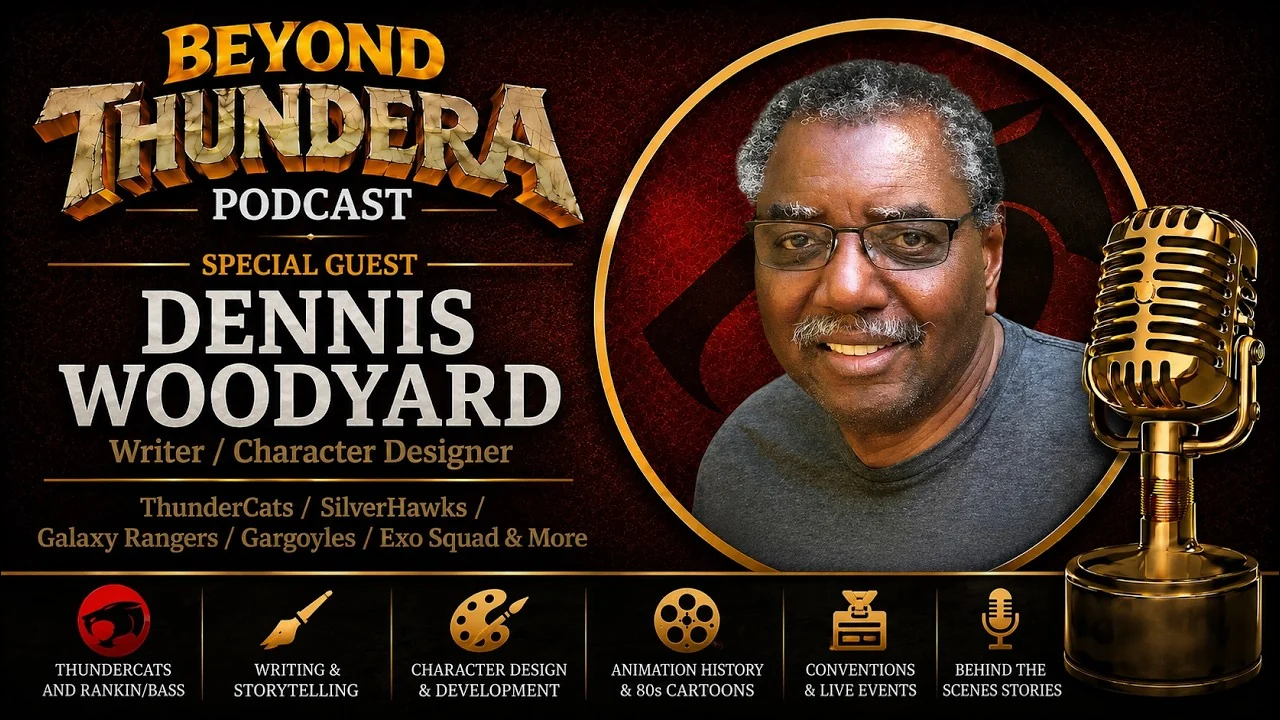 Beyond Thundera, 11 June 2026
 Dennis Woodyard, character designer and writer
Seventy-eight minutes with Sean "Buddha" McKeone and Peter Lawrence, his own story editor, in the room. He reads his start date off the original production book, tells the hiring story and describes the day Rankin/Bass closed.
ThunderCatsFans.org Email Q&A
The earliest substantial interview with him, and one of the richest ThunderCats-specific sources. Covers his hiring, design process, favorite characters and the writing schedule.
ThunderCat of the Day
The showrunner's own tribute, and a substantial assessment of Dennis's work from someone who worked closely with him. Includes scans of his model sheets.
Dennis J. Woodyard - Journeyman Artist
Dennis's blog! The Thundercats Tuesday posts walks through each of the 35 episodes he worked on, pairing his sketches and marked-up script pages with the finished frames, plus storyboards, cels, and other promotional material.
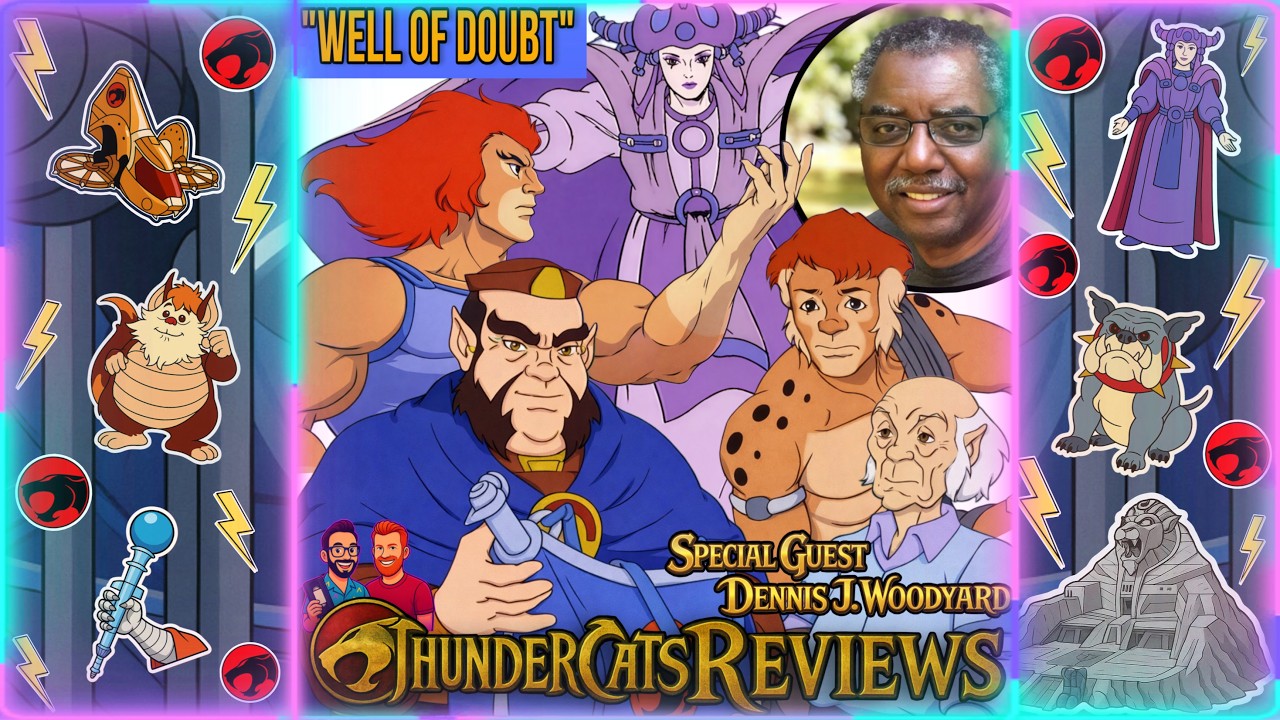 Radical Retro Rewind?! Podcast, 1 May 2026
 ThunderCats Reviews: "Well of Doubt" with Dennis J. Woodyard
From story development to character moments, Ryan, David and Zack get firsthand insight into one of the most memorable episodes of the series.
Sources
- thundercatsfans.org. Dennis Woodyard interview, December 2005
- Beyond Thundera podcast. Dennis Woodyard, 11 June 2026
- Dragonfly Views, Woodyard's own blog, Thundercats Tuesday series, 2015 to 2026
- Rochester Contemporary Art Center. Member Spotlight, 9 May 2026
- Peter Lawrence. Dennis Woodyard, ThunderCat of the day, 3 September 2025
- ThunderCats Wiki. Crew credits, transcribed from the episode end titles
- Wikipedia. List of ThunderCats episodes, for broadcast dates
- IMDb. Dennis Woodyard filmography
- Wikipedia. 31st Daytime Emmy Awards, for the Ozzy & Drix nomination
Compiled by the thundercats.org desk, 4 August 2026. Quotations are reproduced in brief for commentary and are the words of their speakers. Artwork is by Dennis J. Woodyard; ThunderCats and its characters are the property of Warner Bros. Discovery. All images are rehosted on this site's own storage and credited, never hotlinked. No AI generated content appears on this page. thundercats.org is an unofficial fan archive. Corrections and additions are welcome, especially from anyone who was there.