
Aladdin Industries of Nashville, Tennessee put ThunderCats on a steel lunch box in 1985, the same year the show went into syndication. It is one of the most widely owned pieces of ThunderCats merchandise ever made, and one of the last of its kind in a much bigger story: the American metal lunch box was already dying when this one shipped.
Four panels, not one
Most licensed lunch boxes of the era carried a single hero image and filler on the rest. This one is painted on all four faces, which is a large part of why collectors still chase it.
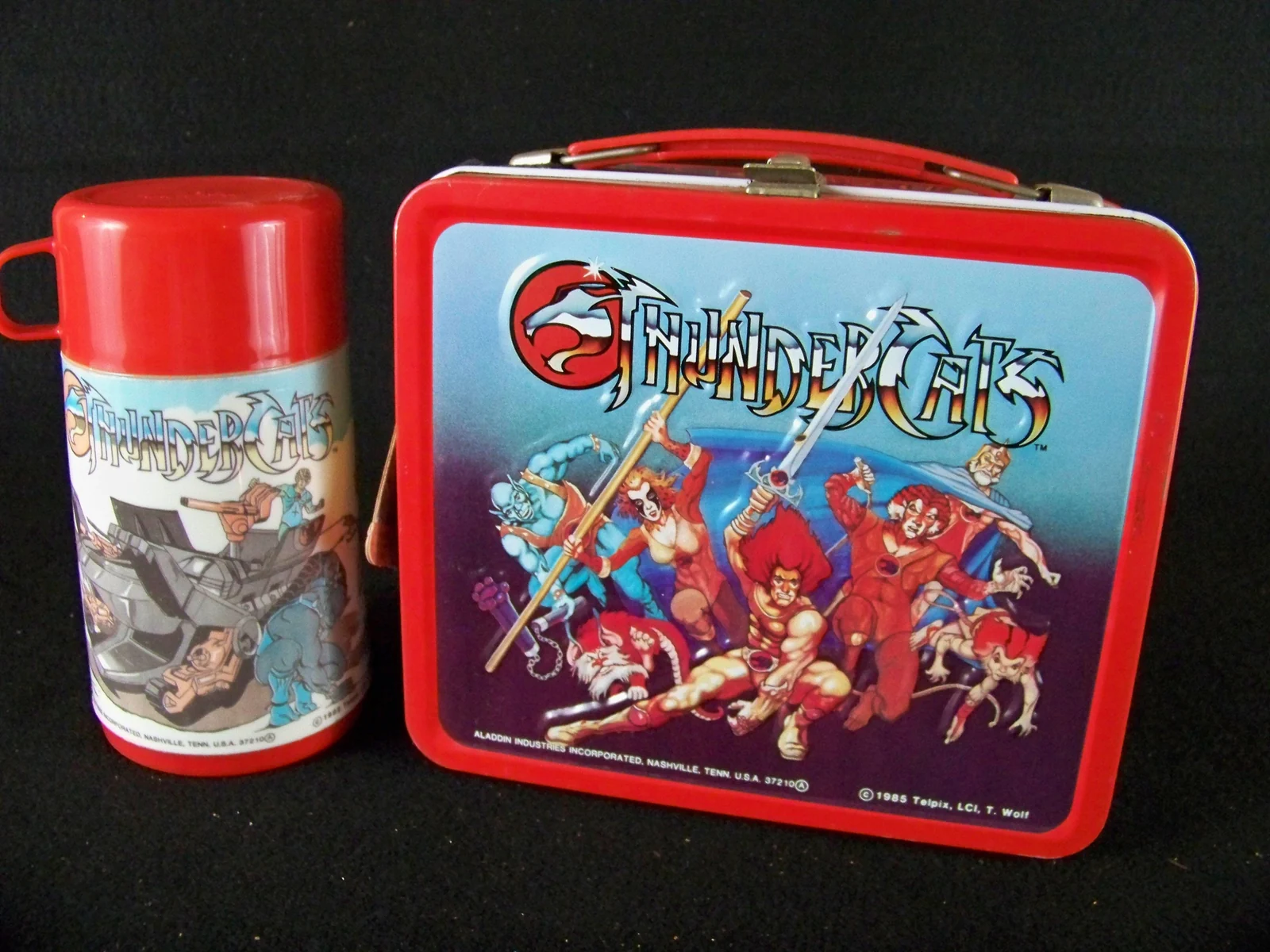
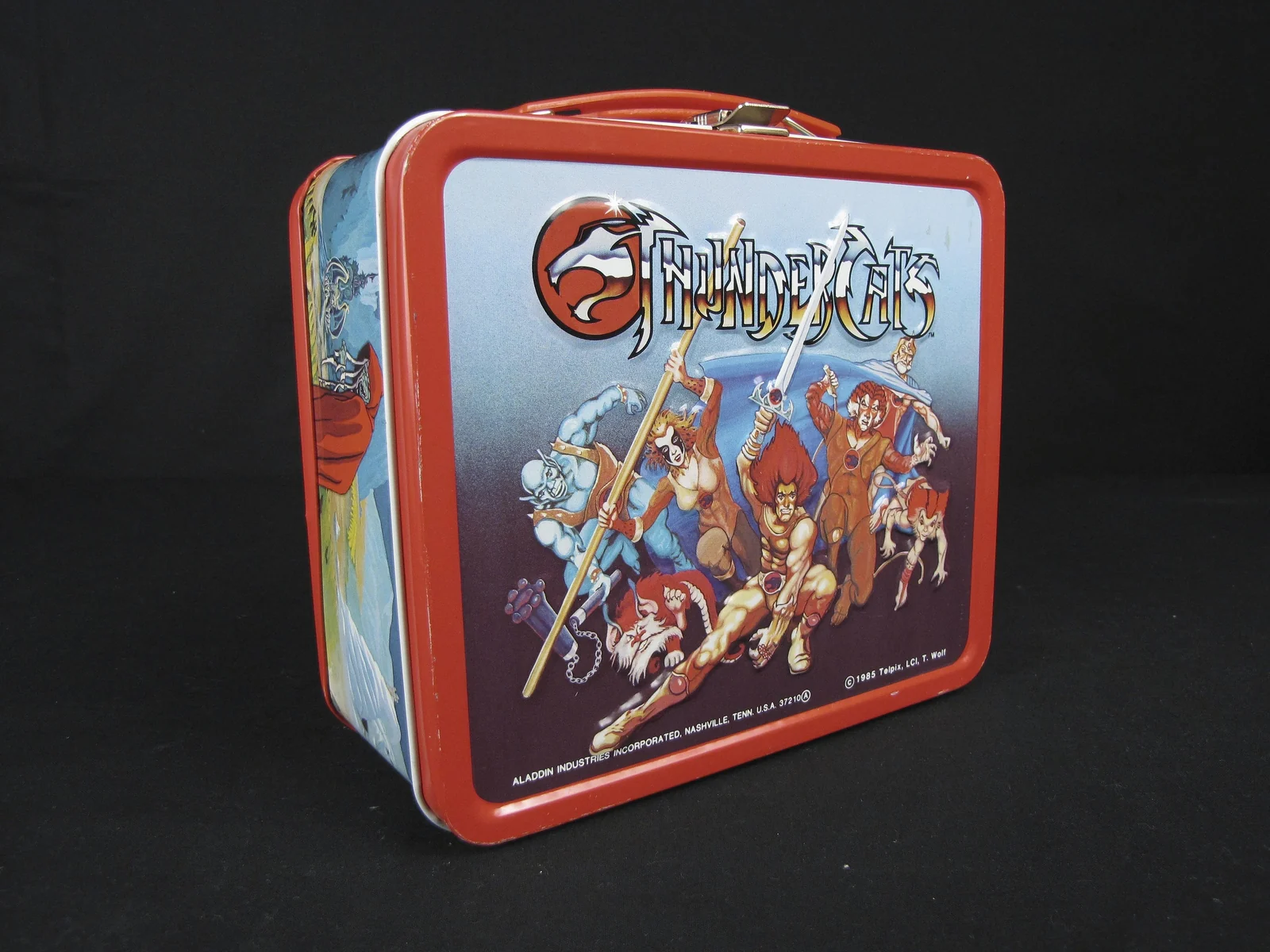
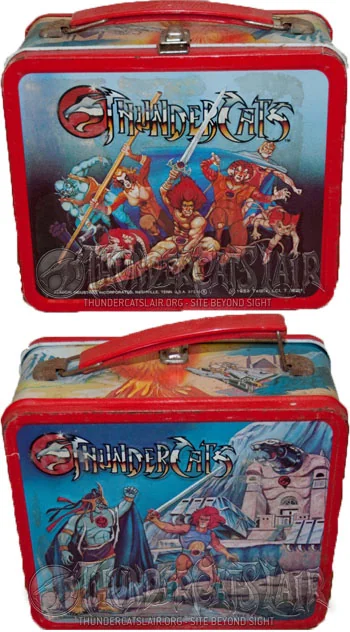
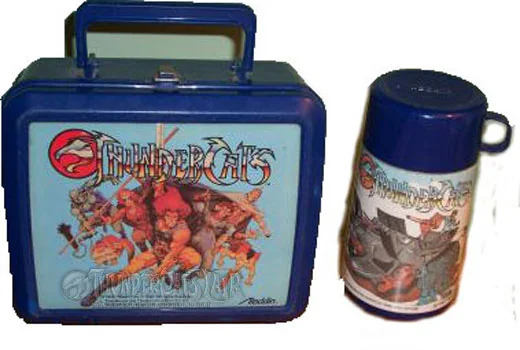
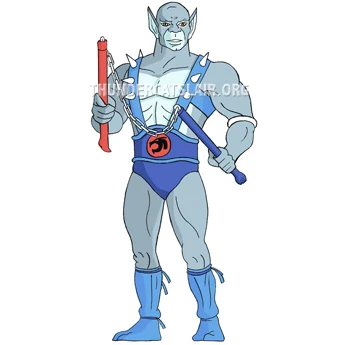
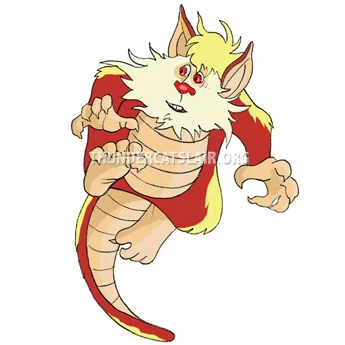
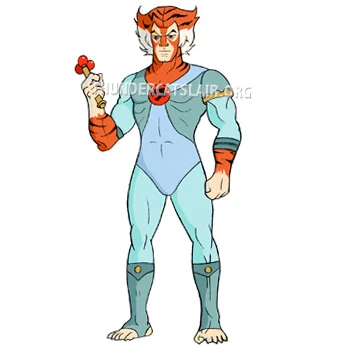
The lid carries the team charge. Lion-O raises the Sword of Omens at full Sight Beyond Sight length, Panthro drives forward with his nunchaku staff, Cheetara and Tygra flank him, Jaga looms translucent at the top right, and Snarf, WilyKit and WilyKat fill the lower register. The whole group is painted against a blue to purple gradient with the ThunderCats logo and the Eye of Thundera set above them.
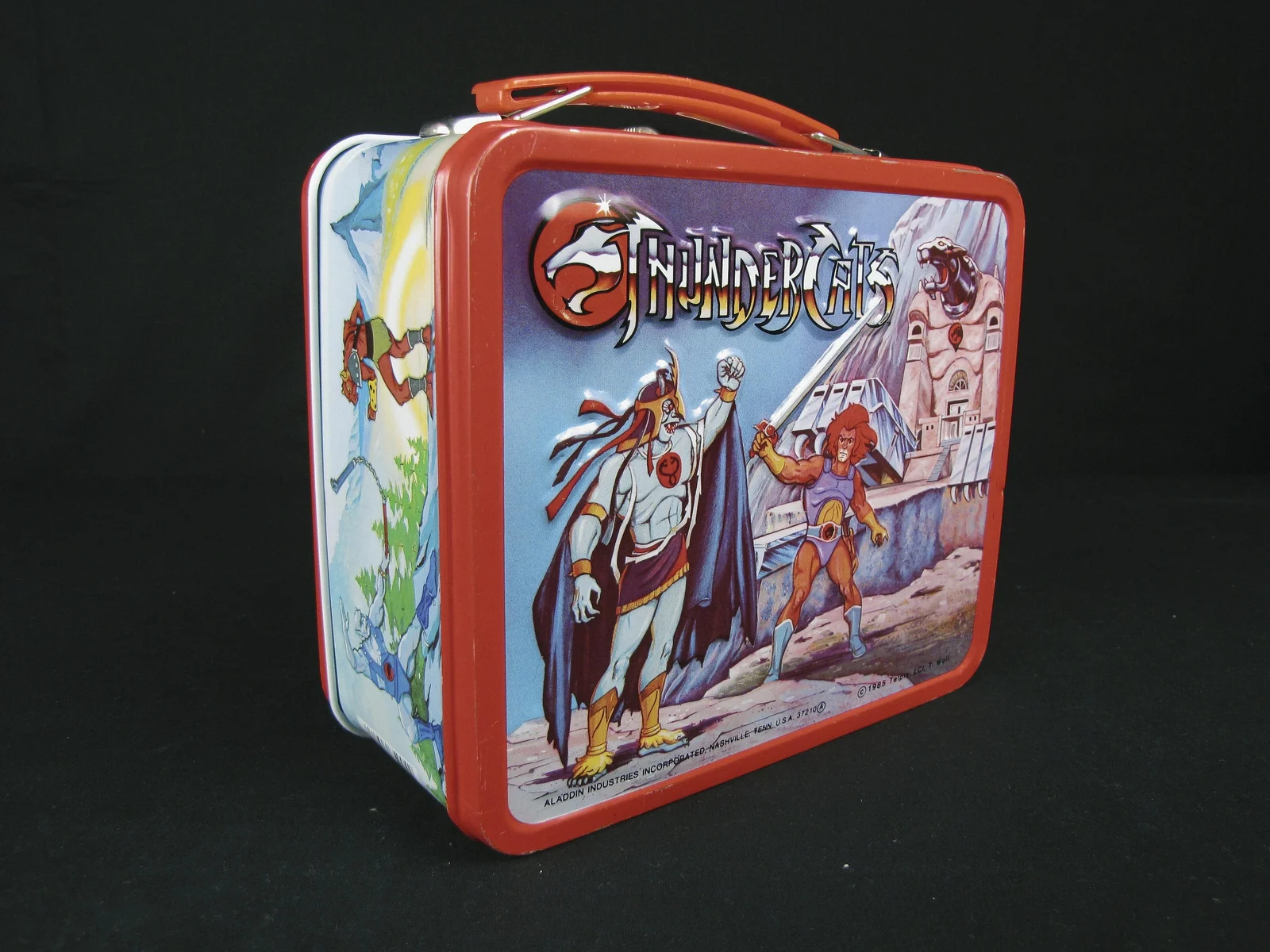
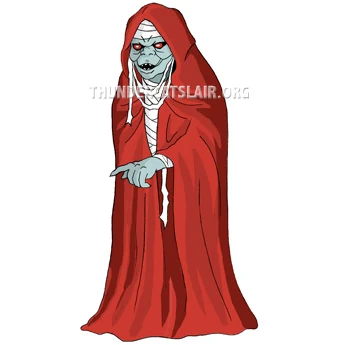
The reverse is the better piece of art. Mumm-Ra stands in his Ever-Living form outside the Black Pyramid, cape open, arm raised, with Lion-O braced against him on the pink stone approach and the great cat-head facade of the pyramid rearing behind. It is a straight villain-versus-hero composition of the kind the box art of this period did well and almost never got put on the back.
The two narrow side panels carry the snow and ice scenes, and the matching vacuum bottle carries the ThunderTank.
The copyright line tells you who owned the show
Look along the bottom edge of any panel and you get the full licensing chain stamped into the litho: Copyright 1985 Telpix, LCI, T. Wolf, with Aladdin Industries Incorporated, Nashville, Tenn. U.S.A. 37210 (A) running underneath. Telpix is Telepictures, the studio. LCI is Leisure Concepts Inc, the licensing agent that placed ThunderCats into the toy and merchandise market. T. Wolf is Ted Wolf, who created the property. The 37210 is Aladdin’s own model number and the bracketed A is the mould revision. Three companies and one creator, printed at four point type on a child’s lunch box.
It is in the Smithsonian
A specimen of this exact box is held by the National Museum of American History in Washington DC under ID number 1988.3160.43, catalogued as object type “Lunchboxes” and filed under Popular Entertainment, Family and Social Life, and School Personal Equipment. The museum records it as metal, 8 1/4 by 8 by 4 inches, made 1985, maker Aladdin. It is not currently on display, which is not a slight: the museum holds roughly 1.7 million objects and only a fraction can be out at any one time.
The two studio photographs of the bare box in the gallery above are the Smithsonian’s own, released under CC0 usage conditions.
The accession number is worth reading. The 1988 prefix means the box entered the national collection three years after it left the factory, while the show was still in first run. Somebody at the Smithsonian looked at a lunch box on a shelf in 1988 and decided it was already a document of how American children lived.
The end of the steel age
The metal lunch box era ran from the 1950s to the middle 1980s and then stopped almost completely. The usual story blames a parents’ campaign that claimed the boxes were being swung as weapons in schoolyards, and that story is repeated everywhere, but there is no record of widespread incidents or of legislation actually passing. The duller explanation is the true one. Injection moulded plastic with a plastic bottle was cheaper to make, lighter to ship and did not need a lithography line.
Collector accounts usually name Aladdin’s rival Thermos and its 1985 Rambo box as the very last mass produced metal lunch box in the United States. Aladdin’s ThunderCats sits right there beside it. Whichever one switched the lights off, this is a box from the final season of a forty year manufacturing tradition, which is why a mass market kids’ item ended up in a national museum.
Variants and what to watch for
- Plastic version. Aladdin also issued ThunderCats as a moulded plastic box with a plastic bottle. Different artwork treatment, far more common, worth a fraction of the metal.
- Bottle type. The metal box shipped with a red-capped bottle carrying the ThunderTank art. Boxes turn up bottle-less constantly, and a complete box plus matching bottle is the difference between a common item and a good one.
- Condition drives everything. These went to school. Expect edge wear on the four corners, handle stress at the rivets, scratching across the lid, and rust inside the rim. Boxes still carrying the original Aladdin stock tag exist and are the top of the market.
- Litho check. Confirm the Telpix, LCI, T. Wolf line and the 37210 (A) stamp. Reproduction tins of eighties properties exist and generally do not carry the full licensing chain.
If you carried one
Every kid who watched ThunderCats in 1985 had one of two mornings: the metal box that clanged, or the soft vinyl bag that did not. If you carried this one, you were carrying a museum piece and did not know it.
Image credits: the two photographs of the bare lunch box are from the collection of the National Museum of American History, Smithsonian Institution (object 1988.3160.43, image IDs NMAH-AHB2010q66222-001 and NMAH-AHB2010q66223-001), CC0 usage conditions apply. The lunch box and thermos set photograph is from a public auction listing.
★ DISCUSSION
Join the conversation.
Comments below are mirrored on the ThunderCats.org forum. Sign in once, post anywhere.